Duo Fratres: The Ikoyi Whisperer
First, a confession
It’s a Saturday morning in Ikoyi. The streets are unusually quiet, there’s a cool breeze coming off the lagoon, and the old trees along the road are doing that thing where they make Lagos feel like a completely different city.
Then you remember you have to get to Banana Island by 10am. And just like that, the magic is gone.
Welcome to Ikoyi.
I’ll be honest with you. I enjoy writing about this place more than I probably should. Say “Ikoyi” to any Lagosian and watch their eyebrows go up a little. People think big houses, big money and big cars. That’s not wrong, but it’s also not the full story.
Ikoyi has history. Much of Old Ikoyi was laid out during the colonial era as a government residential area, which is why you still see those wide roads, generous plots and mature trees. Over the years it became one of the most established addresses in Lagos. More recently, it has become the playground of luxury apartment developers.
So what you have today is old Lagos and new Lagos living side by side. Sometimes they get along beautifully. Sometimes they fight over parking.
Here’s the thing most people miss: Ikoyi is not one place. Banana Island, Parkview, Osborne, Dolphin and Old Ikoyi all share the same name on the map, but living in each one can feel like living in a different city. Let’s take a walk.
The many faces of Ikoyi
Old Ikoyi: the one with the soul
If Ikoyi had a grandparent, it would be Old Ikoyi. Wise, a little set in its ways, and still the best-looking one at the party.
It’s the mature trees. It’s the wide roads. It’s the old detached houses sitting behind big gardens, quietly reminding you of a time when nobody was squeezing six flats onto one plot.
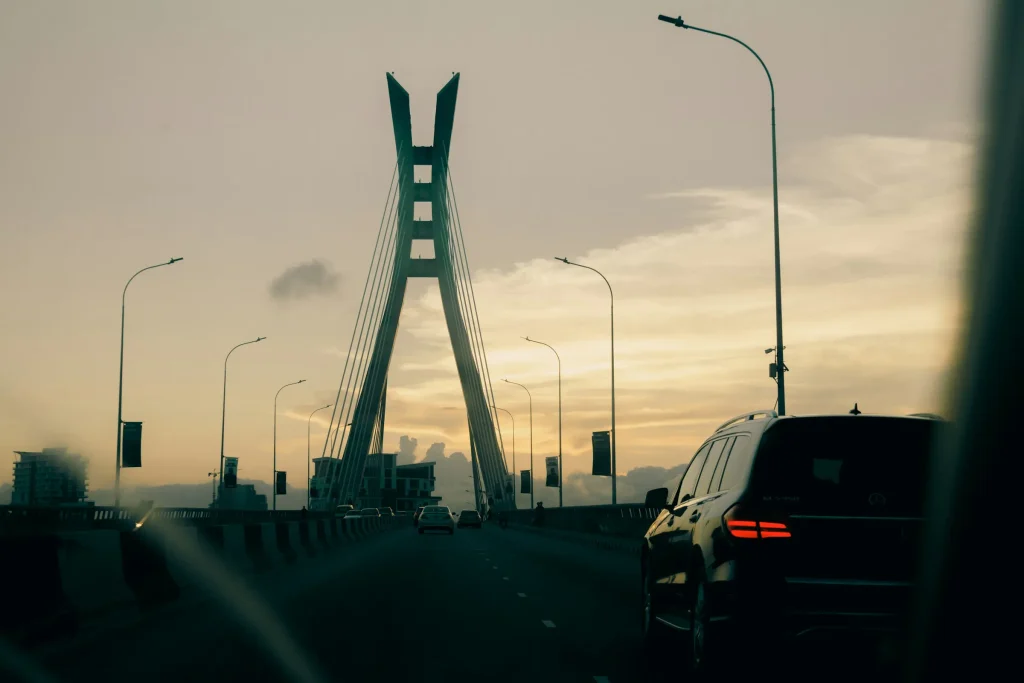
But don’t let anybody tell you Old Ikoyi is all the same. Bourdillon is the famous one, and it has changed the most. Alexander Avenue has the bonus of leading towards the Lekki–Ikoyi Link Bridge. Then you have Glover, Cooper, Lugard, Gerrard, Thompson and Queens Drive, each with its own personality.
My little secret? Some of the loveliest homes are on the quieter side streets, away from the main roads. That’s where the old Ikoyi charm still breathes.
Banana Island: a world of its own
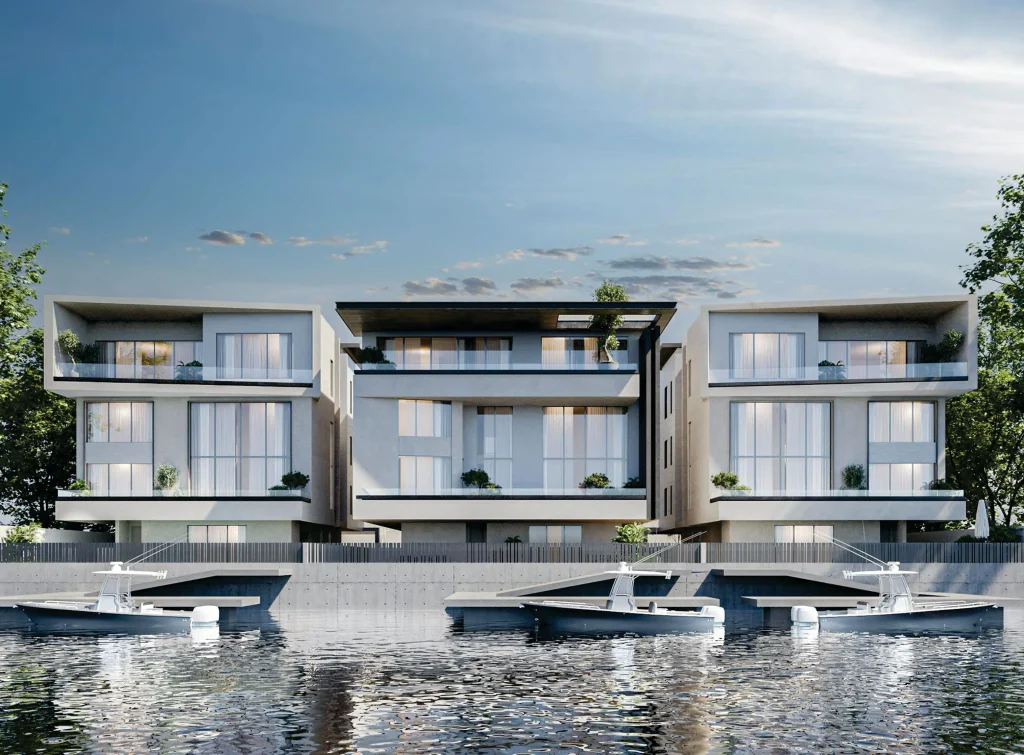
Banana Island is the address that gets mentioned abroad. Controlled access, luxury homes, lagoon views. You know the one.
If privacy is your love language, you’ll understand the appeal immediately.
But here’s what the glossy brochures won’t tell you. Getting in and out depends on a limited road network, so you’ll be driving the same route every single time you leave or come home. Visit once and you won’t notice. Live there for a year and you’ll know every pothole by name.
It’s also mainly residential. Need groceries? Fuel? A quick haircut? You’re probably heading out to the rest of Ikoyi or Victoria Island.
Parkview Estate: the family favourite
Parkview has always had a soft spot in the hearts of families. It has that proper estate feel: gates, structure, neighbours who notice when your car is not in its usual spot.
There’s a mix of detached homes, terraces and apartments, with schools and everyday services close by. For parents, that’s gold.
A few things to ask about, though. The gate can get congested at certain hours. Estate rules and service charges are worth reading before you sign anything. And because it sits on reclaimed land, ask about drainage. Always ask about drainage.
Mojisola Onikoyi: compact and quietly tucked away
Mojisola Onikoyi is one of those places that looks perfect on a quiet afternoon. Older homes, newer developments, a settled feel.
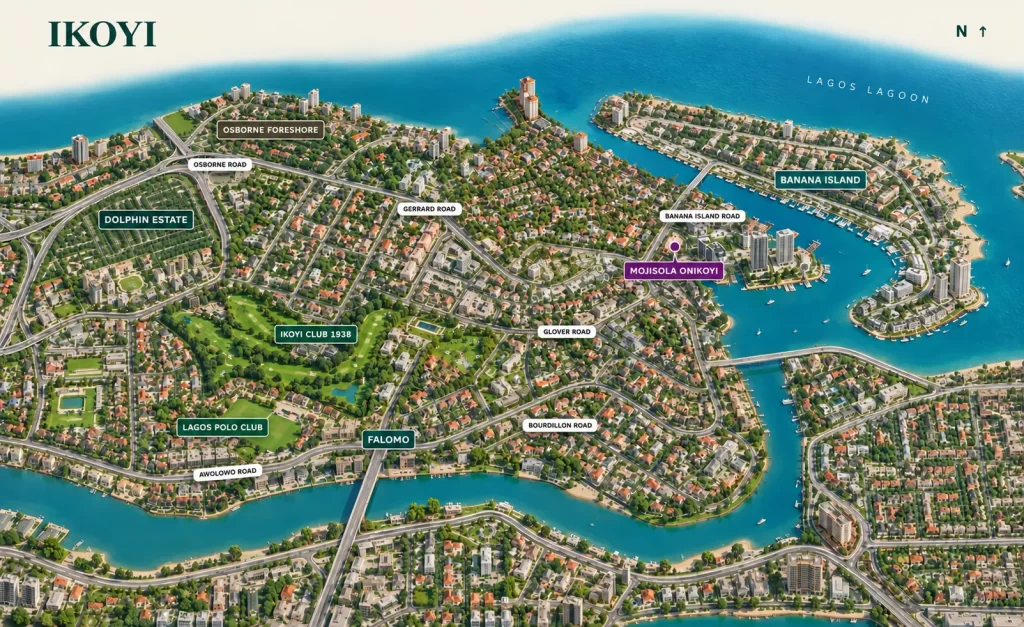
Then you notice the streets are a bit narrow for the size of the houses. There’s barely any empty land left. And getting in and out leans heavily on the Gerrard Road corridor, which it shares with Banana Island and Shoreline.
Coming home from certain directions means driving past your turning and looping back. Once is fine. Four times a day? Your patience will be tested.
Shoreline: the smaller sibling
Shoreline is a contained development in the same Gerrard Road neighbourhood, close to Banana Island and Mojisola Onikoyi.
Because it’s small, the details matter more: what’s right outside the gate, and how easy it is to get in and out. I’d look at it alongside its neighbours rather than as its own island.
Osborne Foreshore: for people who like waking up to water
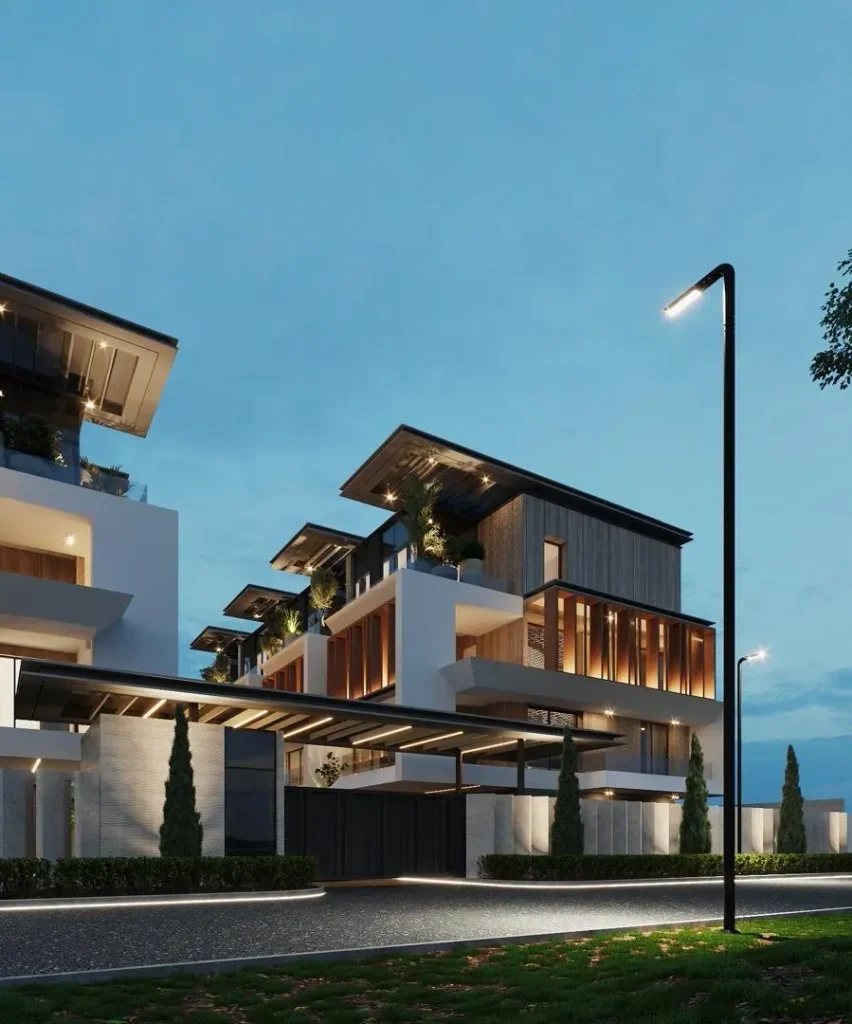
Osborne Foreshore is built on reclaimed land and has a waterfront feel Old Ikoyi can’t offer. You’ll find detached houses, terraces and apartments, and it’s close to Third Mainland Bridge, which is a blessing if you go to the Mainland often.
Newer apartment blocks have made some parts busier, and that has brought the usual conversations about parking, roads and drainage.
A lovely view is one thing. Good building management, enough parking and roads that don’t turn into rivers in July are another. Walk the different streets before you make up your mind.
Dolphin Estate: two stories in one
Dolphin is not the Ikoyi you see in property adverts, and that’s fine.
Some parts feel calm and residential. The sections with blocks of flats are much denser, with a buzz that feels closer to Lagos Island than to Old Ikoyi. More people, more movement, more life.
If location and convenience matter most to you, it can work. If you want quiet, look elsewhere. Either way, check flooding around the specific building and its access roads.
South-West Ikoyi and Falomo: where Ikoyi gets busy
As you get closer to Awolowo Road and Falomo, Ikoyi changes gear. Shops, offices, banks, restaurants, traffic.
If you like having everything a few minutes away, you’ll love it here. If you want to hear birds in the morning, maybe not.
Awolowo Road has been a commercial artery for decades, and Falomo connects you straight into Victoria Island. It’s a reminder that Ikoyi isn’t only quiet streets. Some of its most convenient corners are also its noisiest.
A closer look at the streets of Old Ikoyi
In Old Ikoyi, the street matters almost as much as the house. Two homes five minutes apart can give you two very different lives.
Bourdillon Road is practically a brand. Mention it and people nod respectfully. But it’s also where you’ll see the biggest shift from old detached homes to apartment towers.
Gerrard Road has its own established homes, but it’s also the main doorway to Banana Island, Mojisola Onikoyi and Shoreline. So traffic and junctions are part of the deal.
Alexander Avenue gets you towards the Link Bridge quickly. Convenient, yes. Quiet, not always.
Glover Road is a nice balance: schools, restaurants, residential buildings and that classic Ikoyi feel all on one stretch.
Cooper Road, Lugard Avenue, Thompson Avenue and Queens Drive, plus the little roads around them, are worth a slow drive. Some stretches are still beautifully calm. Others have been rebuilt almost beyond recognition.
There’s no perfect street for everybody. A family wants a quiet road near school. Someone working in VI wants a quick exit. Another person just wants a good café within reach.
And in Lagos, as we all know, the difference between a five-minute drive and a forty-five-minute drive is simply what time you leave the house.
Raising a family in Ikoyi
It’s 6:45am. The kids are dressed, lunch boxes are packed, and somebody has lost one shoe. You finally get everyone into the car, and the estate gate is already backed up. Sound familiar?
Ikoyi has some of the most established schools in Lagos, and that’s a big reason families settle here.
Corona School Ikoyi is usually the first name parents mention, and for good reason. It’s one of the top primary schools in the country.
St Saviour’s School is another long-standing primary school with British roots. Lagos Preparatory & Secondary School covers both primary and secondary. For the little ones, there are nursery and early-years options in Parkview and the neighbourhoods around it. And St Gregory’s College, one of Lagos’s historic schools, is a name many families already know.
Curriculum, fees, facilities and admissions are things you should confirm directly with each school. They change.
But here’s my real advice: test the school run. Not on a Sunday. On a Tuesday at 7am, and again at pick-up time.
A school that looks “only 3km away” on Google Maps can easily become a daily 40-minute ordeal because of one stubborn junction. The school might be fantastic. Your mornings shouldn’t be miserable.
Everyday Ikoyi: the small things that make life easy
Nobody falls in love with a neighbourhood because of the pharmacy. But you will absolutely fall out of love with one if there isn’t a pharmacy nearby.
Where do you buy groceries? How far is the nearest hospital? Can you run three errands without losing your whole Saturday?
For most of Ikoyi, the answer runs through Awolowo Road and Falomo. That’s where you’ll find most of the shopping, banking and everyday services. Victoria Island and Lagos Island are close by for anything bigger.
For healthcare, Lagoon Hospitals is the established all-rounder, covering a broad spectrum of care. For something more specialised, First Cardiology Consultants focuses on heart care. There are other private hospitals and clinics around Ikoyi too.
My advice? Don’t just assume “I live in Ikoyi, so a hospital must be close.” Find out exactly which facility is nearest to your home, and save the number. If you have young children or elderly parents with you, do this in your first week.
Some of the more tucked-away estates mean you’ll drive out even for small things like bread and eggs. Some people love that separation between home and noise. Some people find it annoying. Just know which one you are.
Where to eat (because we’re Nigerians and food matters)
Let’s be fair to Victoria Island: a lot of Lagos’s restaurant action happens there. But Ikoyi holds its own, and some of my favourite meals in the city have happened within its borders.
For the special occasion
Brisk Lagos is one of the better restaurants in Ikoyi. It features excellent decor and a very good menu. The food is great too. It’s located in the Falomo Square Complex and has more than enough parking on most days. Early reservations are advised during busy seasons.
The George gives you that polished hotel-dining experience. Good for anniversaries, impressing in-laws, or quietly closing a deal.
For brunch and lazy weekends
Eric Kayser, inside the Alliance Française complex, is my go-to for coffee, croissants and a slow breakfast. Bonus: you can wander into an exhibition afterwards.
The Loft Ikoyi at Falomo Square Mall is lively and social, and slides from restaurant to lounge as the evening goes on. Get there early if you want the window seats.
The Garden Ikoyi on Bayo Kuku Road is the kind of place you go when you want greenery with your meal. Reservations help on weekends.
White Tree Bistro and Orchid Bistro are my early-morning heroes. They open earlier than most, so they’re perfect for grabbing a coffee and a quick snack before the Lagos day swallows you whole.
For something different
Danfo Bistro has a fun, laid-back energy that makes a nice change from the very formal spots.
And please don’t sleep on the small places: the neighbourhood bakeries, the casual lunch spots, the suya man who knows your order. Sometimes the best recommendation is simply somewhere pleasant to have breakfast before work.
Just across the bridge in VI
Residents don’t really think in boundaries when hunger strikes. A few Victoria Island favourites worth the short drive: Ona, where traditional Nigerian dishes get reimagined, NOK by Alara for a beautiful casual dinner, and La Chaumiere for a BIG Sunday brunch (emphasis mine).
Ikoyi after dark
By day, Ikoyi is all calm streets and serious business. But when the sun goes down around Falomo, somebody turns the music up.
W Bar Lounge is the one everybody knows. It sits on the water at the Cowries Terminal, LASWA Yard, right by Falomo Bridge. The lagoon is the real star here. Go early, catch the sunset with a cocktail, and watch the place slowly fill up as the night gets going. It’s also a lovely first-date spot before the crowd arrives.
Silk Lagos on Awolowo Road is a completely different mood. Think restaurant early on, then lights, music and a crowd that doesn’t believe in going home. If you want energy, this is where you’ll find it.
The Loft Ikoyi at Falomo Square Mall quietly turns from dinner spot to lounge as the evening goes on, which makes it great for a night that starts slow.
For a softer evening, Liquid Hub by Spronks on Olawale Dawodu Road is a proper wine bar. Good conversation, good bottles, no shouting over the DJ.
The beauty of living in Ikoyi is that a good night out doesn’t mean crossing Lagos. And if you want something different, Victoria Island’s party scene is just next door.
Quiet enclaves on one side, lagoon-side cocktails on the other. That’s Ikoyi for you.
Weekends: parks, clubs and a little culture
All work and no play makes Tunde a very cranky Lagosian. Thankfully, Ikoyi has options.
Get some fresh air
It surprises people, but Ikoyi has green spaces. Osborne Recreational Park, The Garden Ikoyi, Falomo Garden and Dolphin Park are all spots where you can take a walk, read under a tree, or let the kids run off some energy.
Then there’s the Lekki–Ikoyi Link Bridge itself. On early mornings, it turns into an outdoor gym, with runners, walkers and cyclists everywhere. It’s one of the most popular morning-run spots in Lagos, and the lagoon view at sunrise is free. Go before the heat and the traffic wake up.
If you want a bigger park, Muri Okunola Park is a short drive away in Victoria Island.
The clubs (the old-school kind)
Ikoyi Club 1938 has been at the centre of the neighbourhood’s social life for generations. Golf, tennis, swimming, and a lot of business conversations disguised as small talk. It’s members-only, so you’ll need a member to sign you in as a guest.
The Lagos Polo Club is another Ikoyi institution. Even if you’ve never touched a horse, a big polo weekend is an experience in itself, part sport, part fashion show.
For people who love the water, the Lagos Motor Boat Club is also in Ikoyi.
A dose of culture
Alliance Française de Lagos is one of my favourite places in the neighbourhood. Exhibitions, films, concerts, talks, and Eric Kayser right there when you need a coffee. It’s a beautiful building too.
A short drive away on Lagos Island, the National Museum and the J. Randle Center for Yoruba Culture & History are worth a visit, especially if you have visitors in town who think Lagos is only traffic and parties.
That’s the charm of Ikoyi. You can live somewhere quiet and still be ten minutes from almost everything that makes Lagos fun.
Getting around (a.k.a. the real test)
Ikoyi’s biggest gift is its location. Lagos Island, Victoria Island, Lekki and the Mainland are all within reach.
The Link Bridge made Lekki feel much closer, and Third Mainland Bridge is still the main road for anyone heading to the Mainland.
But “close” in Lagos is a feeling, not a measurement.
If you live near a major road, getting out is easy. If you live deep inside an enclave, you might spend ten minutes just reaching that road.
Banana Island, Mojisola Onikoyi and Shoreline show this perfectly. All three lean on the Gerrard Road corridor. Depending on which way you’re coming from, you’ll drive past your turning, find a spot to turn back, and then head home.
If you work from home and rarely move at rush hour, you’ll barely notice. If your household is doing school runs, office runs and market runs every day, it adds up fast.
So here’s the lesson: don’t just ask how close a house is to where you’re going. Ask how you’ll actually get there.
The Ikoyi your parents knew vs the Ikoyi of today
Ask anyone who grew up here and they’ll tell you: “Ikoyi has changed o.”
They’re right. Many of the old family homes are gone. Plots that once held one house with a big garden now hold a tower with twenty flats.
There are real upsides. Modern apartments come with lifts, pools, gyms, proper security and backup power. They also make it possible for more people to live in areas where a detached house would be far out of reach.
But there’s a cost. More apartments mean more people, more cars and more pressure on roads and drains. And when three buildings are going up on the same street, you’ll be hearing pile drivers with your morning tea.
The old Ikoyi hasn’t disappeared. It’s just sharing the space now.
Is that progress? It depends on who you ask. The young professional in a serviced apartment loves it. The uncle who remembers riding his bicycle down a quiet Bourdillon might sigh a little.
Honestly, both of them have a point. And maybe that’s what keeps Ikoyi interesting: it carries its history with pride, but it refuses to stand still.
Before you pack your boxes
You’ve seen the apartment. The finishing is lovely, the agent is smiling, and you’re already picturing your couch by the window. Pause. Ask these questions first.
- Does it flood? Parts of Ikoyi are low-lying or reclaimed. Ask neighbours, not just the agent. Better still, drive past after a heavy downpour.
- How does the light work? Most buildings mix public power, generators, inverters and solar. Ask how many hours of public supply they actually get and who pays for diesel.
- Where will I park? A beautiful building becomes a daily headache if residents and visitors are always fighting for space.
- What’s being built next door? Construction noise in Old Ikoyi is real. Look at the neighbouring plots.
- What’s the road like? The house can be perfect, but if the road leading to it is a nightmare, you’ll feel it every day.
None of this is unique to Ikoyi. It’s just a reminder that even in one of Lagos’s finest addresses, the ordinary details decide how happy you’ll be.
So, is Ikoyi for you?
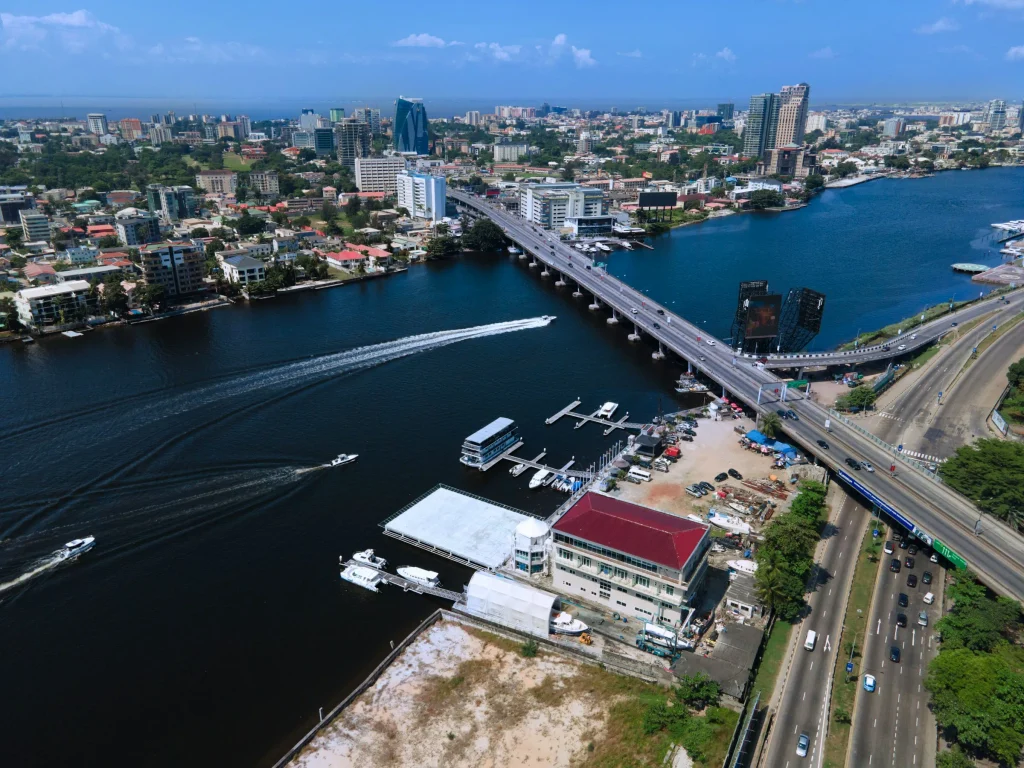
Ikoyi isn’t a place you understand in one drive. It reveals itself slowly.
There are the famous addresses and the institutions everybody knows. But there are also quiet side streets, a favourite café table, a sunset at the water’s edge, and a short-cut you’ll be proud of discovering.
Families come for the schools and the estates. Professionals come for the location. Some people come for the history, the water or the trees. Most stay because, somewhere along the way, it started to feel like home.
My one piece of advice? Take your time. Drive the streets at different hours. Eat at the small places. Sit by the lagoon. Notice how the traffic behaves at 8am and at 6pm.
You might find that the part of Ikoyi you fall for isn’t the one you expected. And honestly, that’s the fun part.
See you around Falomo.